
How We Hatch Trout Eggs in Our 1930s Hatchery Building
Step 1: Preparation
We order our trout eggs months in advance, and preparation begins just as early. Before a single egg shows up, we clean and sanitize every stainless steel trough and hatching jar. The hatchery building itself gets reset and dialed in. Once the eggs arrive, everything needs to be in place.
The eggs arrive in a Styrofoam cooler, packed carefully with ice both above and below, not touching the eggs directly. Direct contact with ice would kill them. The goal is to keep the ambient temperature inside the box around 36°F.
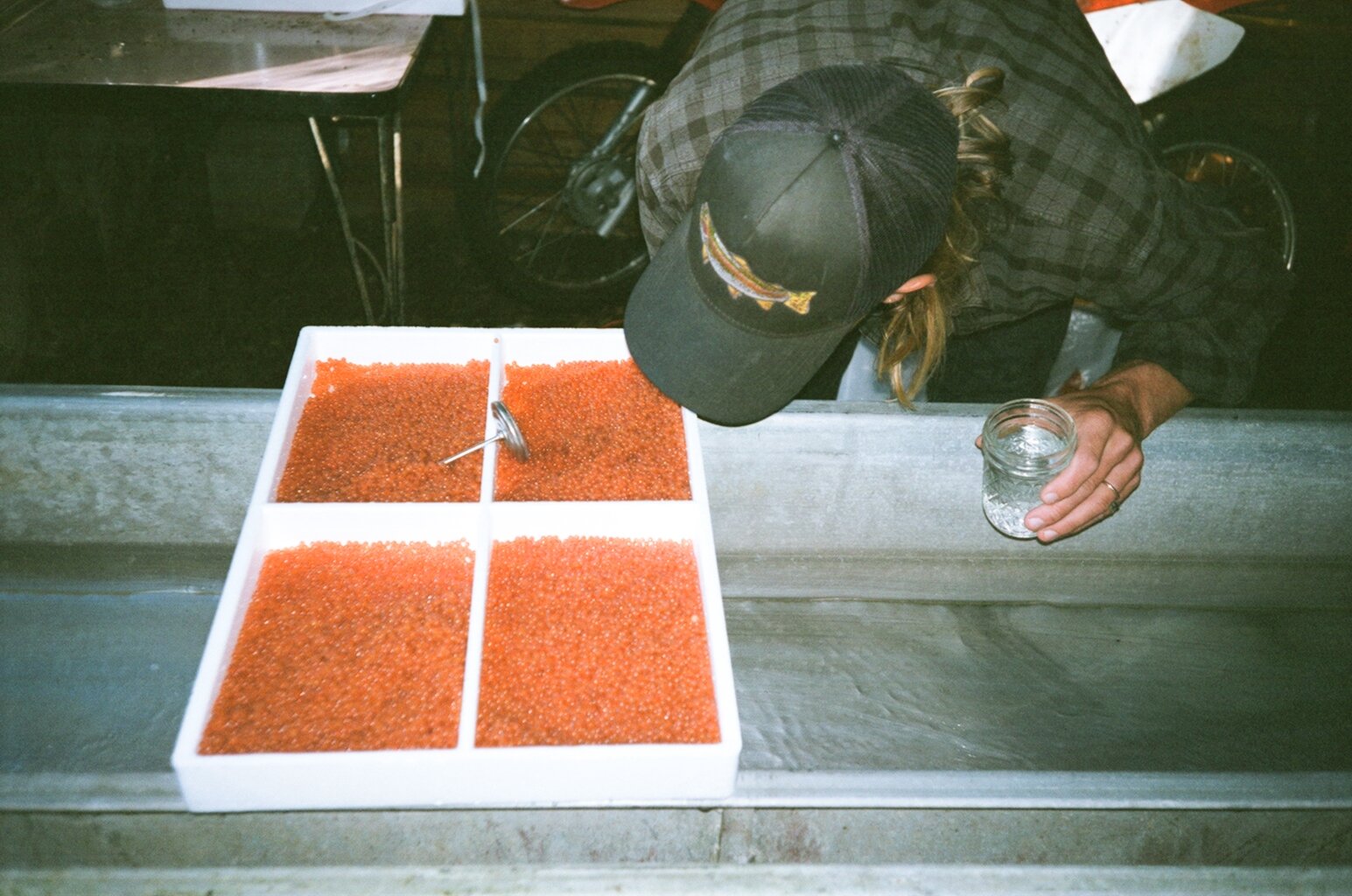
As soon as the shipment arrives, we take it into the hatchery building. We open the box, remove the ice, and gently pull out the trays of eggs, setting them on top of our stainless steel troughs while we check temperatures.
Typically, the eggs arrive around 36°F, while our spring water runs closer to 54°F. That difference matters. Plunging cold eggs straight into warmer water would kill them. So over the next couple of hours, we slowly pour spring water over the eggs which gradually brings their temperature up to match the water they’ll live in.
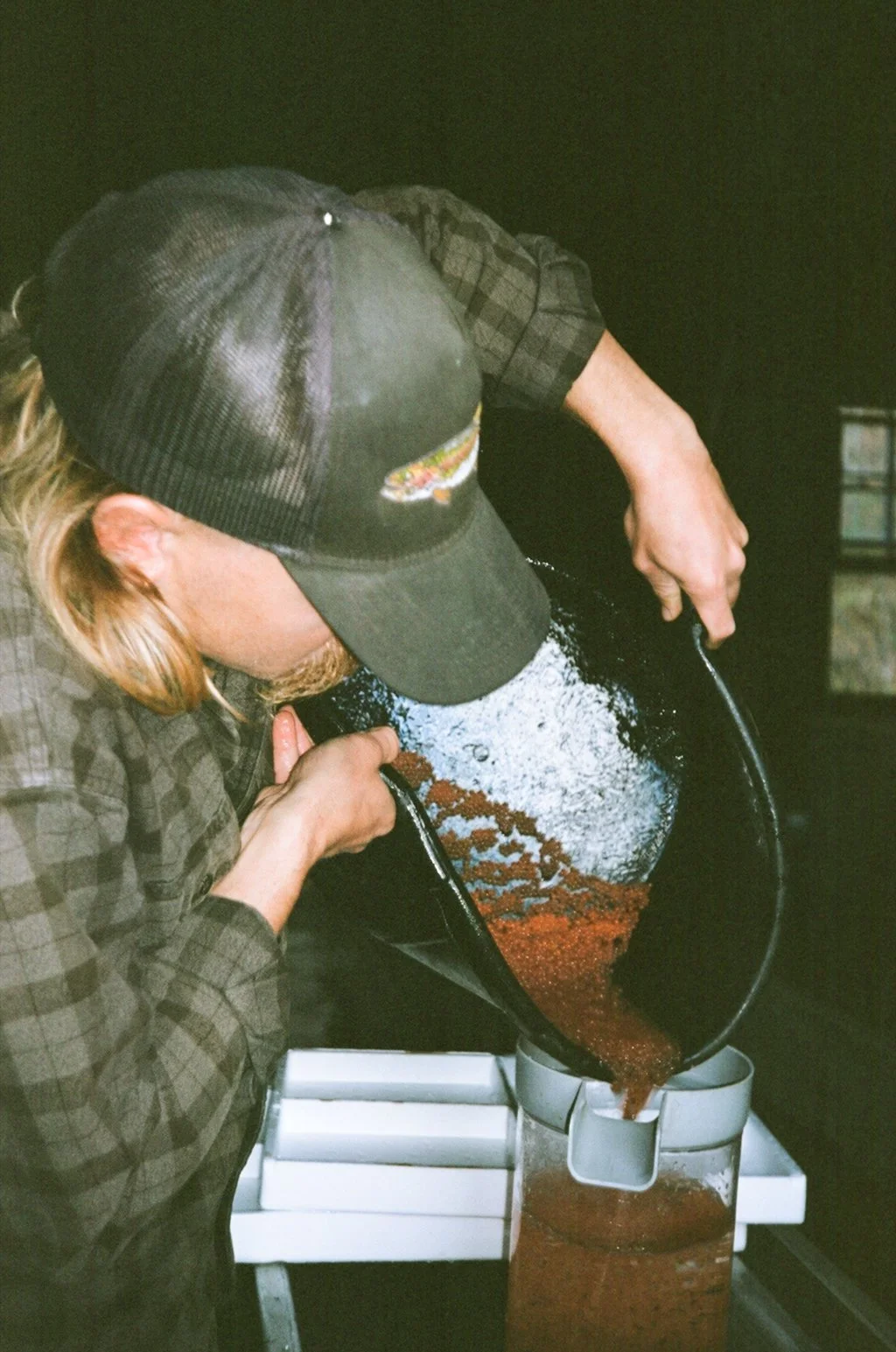
Once the eggs are warmed to about 54°F, we rinse and gently pour all the eggs into our hatching jars. This is usually about 50,000 eggs.
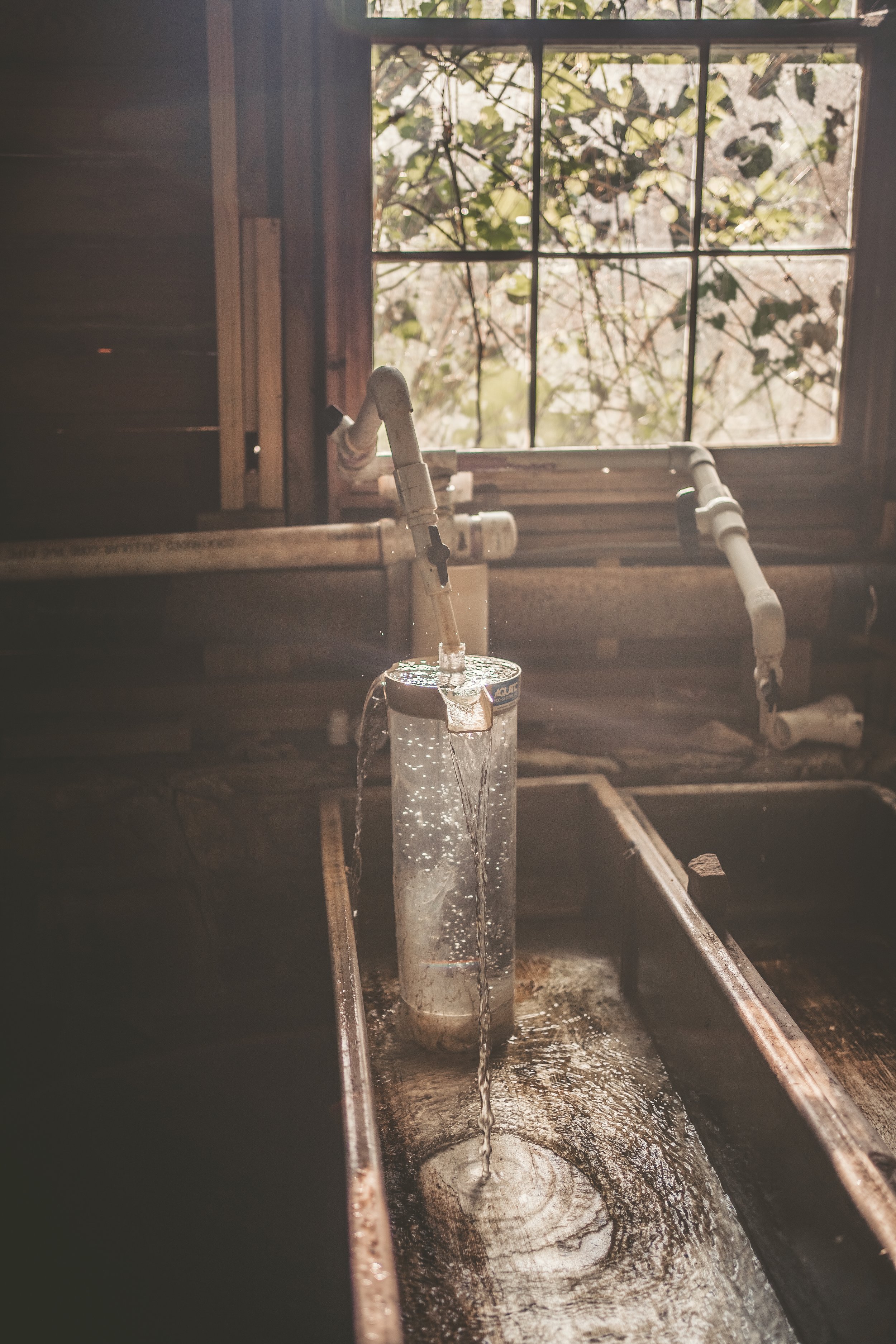
Each jar is hooked up to a water line that is connected to our spring on the property which provides a constant flow of fresh, cold mountain spring water. This keeps the eggs oxygenated and gently tumbling which mimics natural trout stream conditions. For the next two weeks, the eggs rest here until they begin to hatch.
From Eggs to Alevins
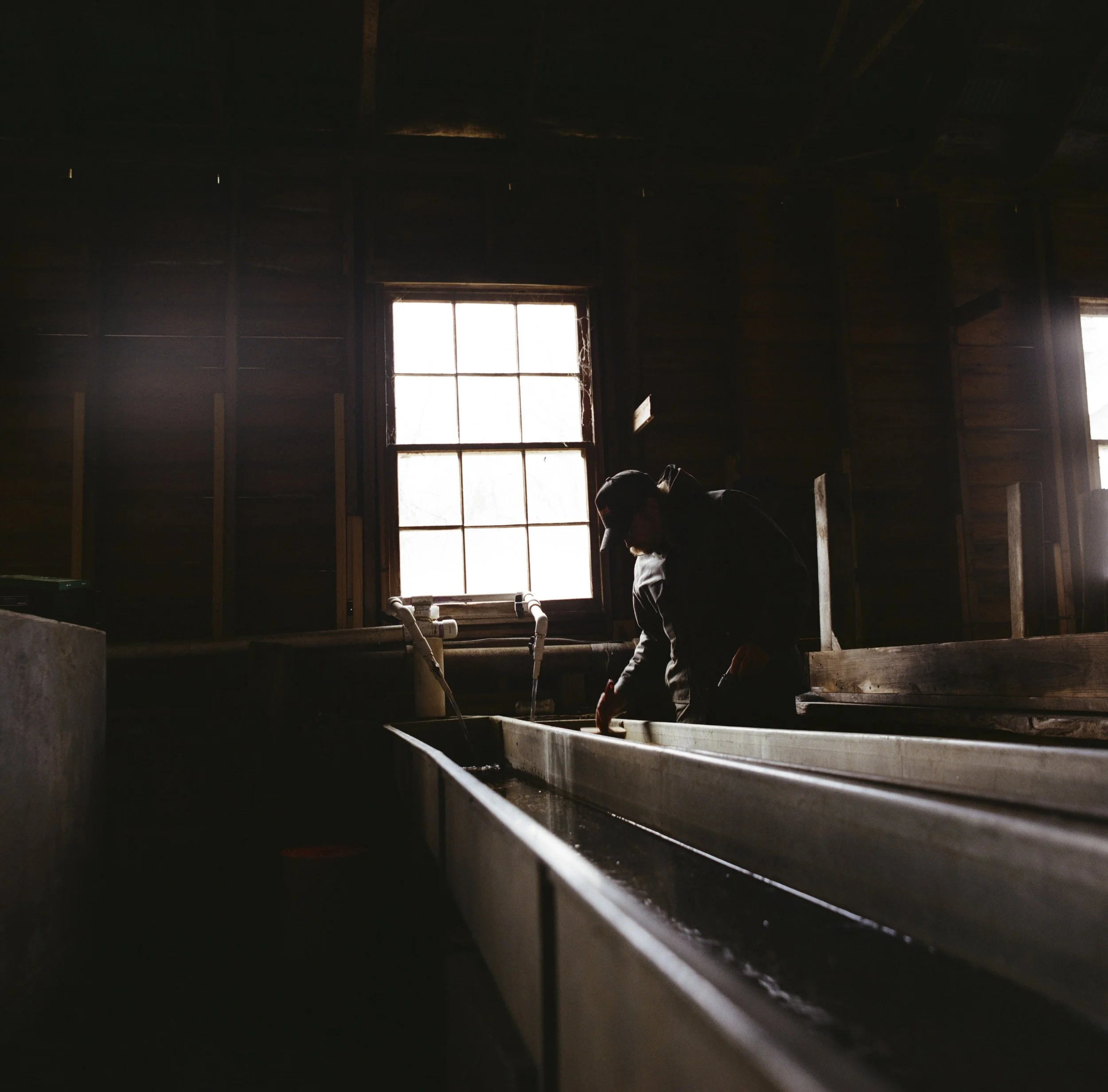
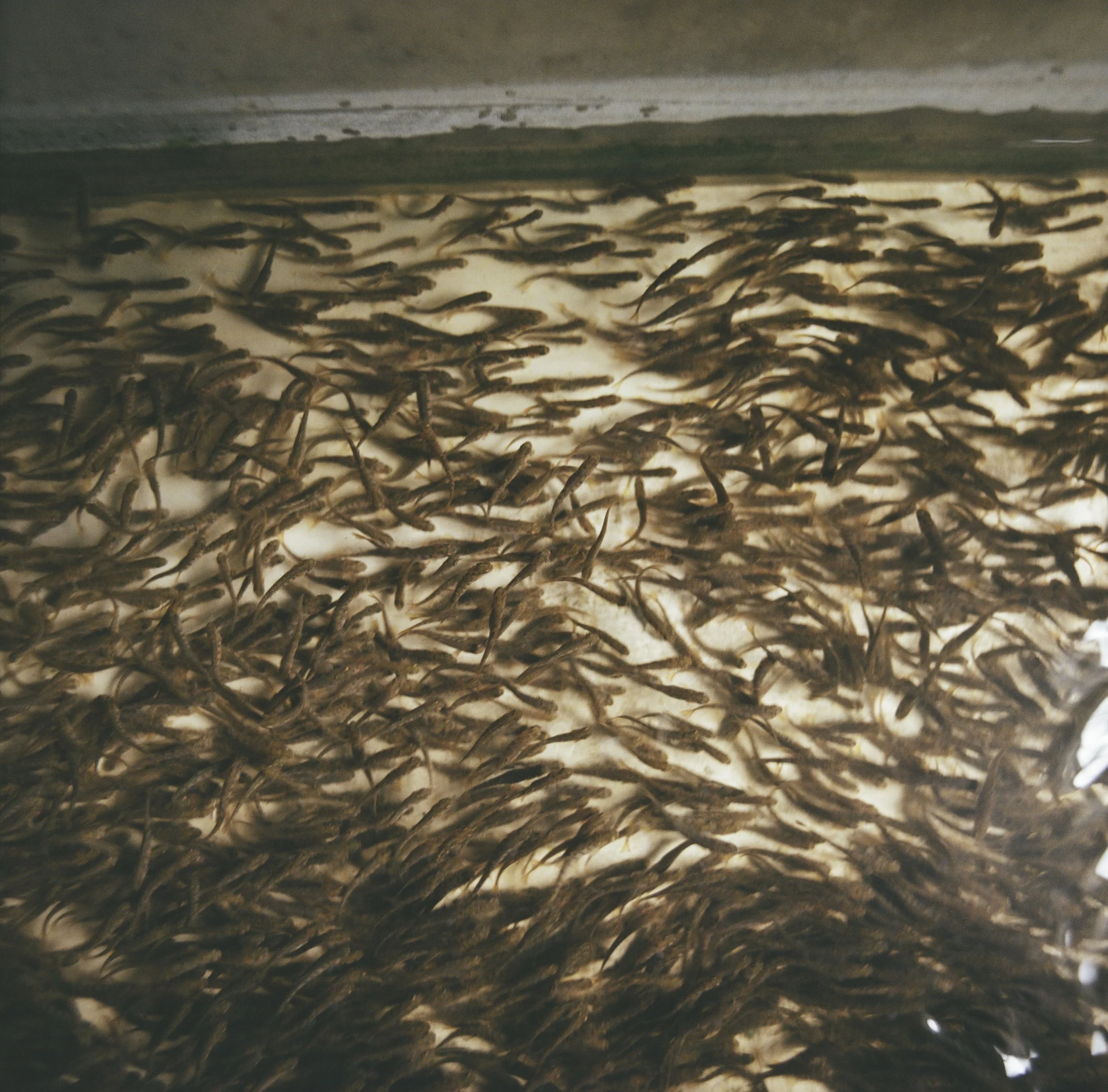
Once hatching begins, we empty the jars into stainless steel troughs. For the next two weeks, we carefully pick out any unhatched eggs or fry that didn’t survive. We do this by hand with a siphon, it takes a few hours every day but it is a crucial chore to maintain pristine water quality. Dead eggs and fish decomposing in the water is not good for the newly hatched fish.
When their yolk sacs are fully absorbed, we begin feeding them a powdered grass-fed beef liver. This is a nutrient-dense starter feed that supports strong early growth. We use belt feeders that release food slowly throughout the day, because young trout need to feed constantly throughout the day.
Moving Day
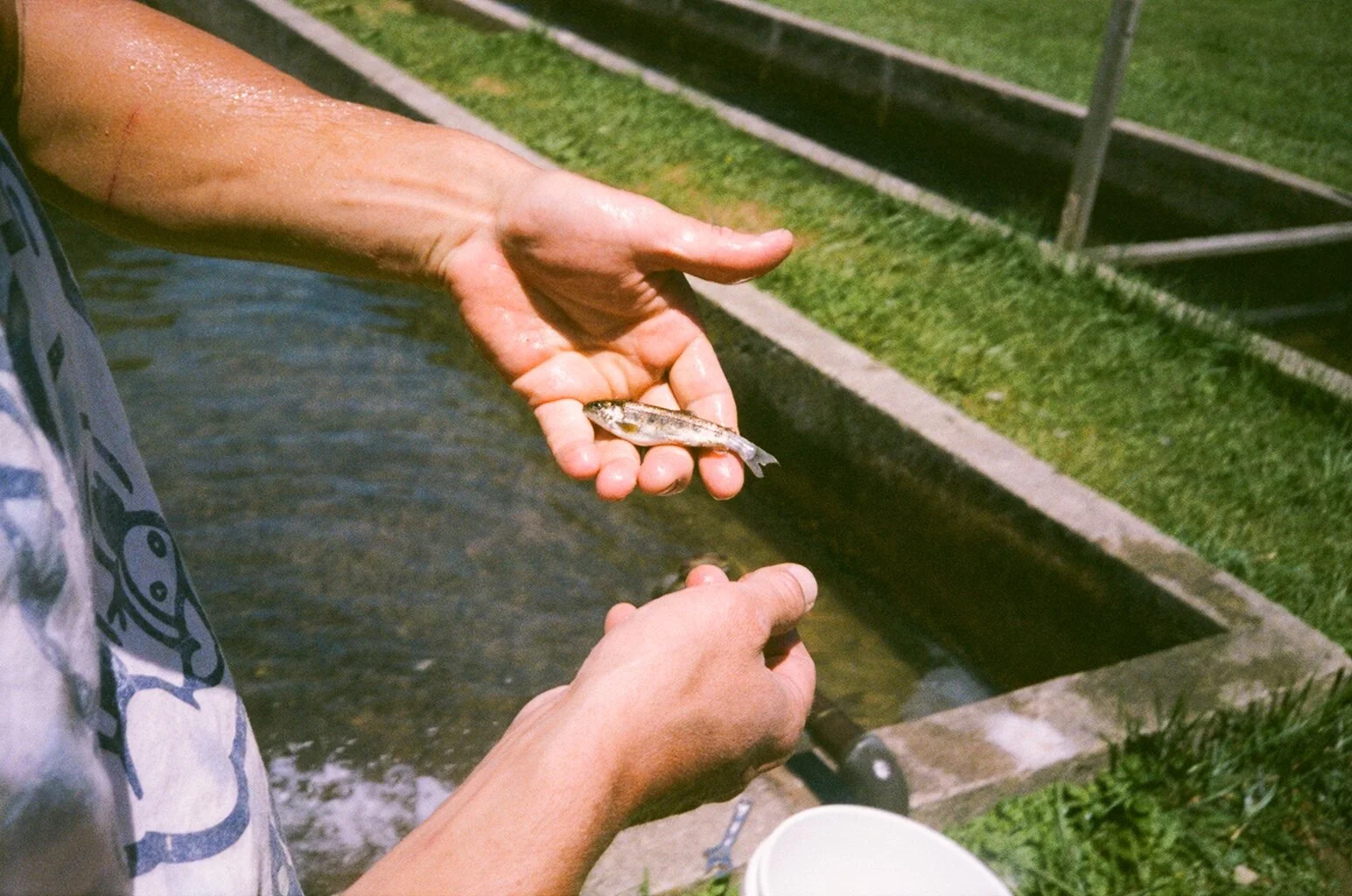
After about a month in the stainless steel troughs, the fish are transferred into the concrete troughs inside the hatchery building, where they’ll spend another month. From there, they’re moved outside across the street into one of our concrete raceways — officially beginning the next stage of life on the farm.