
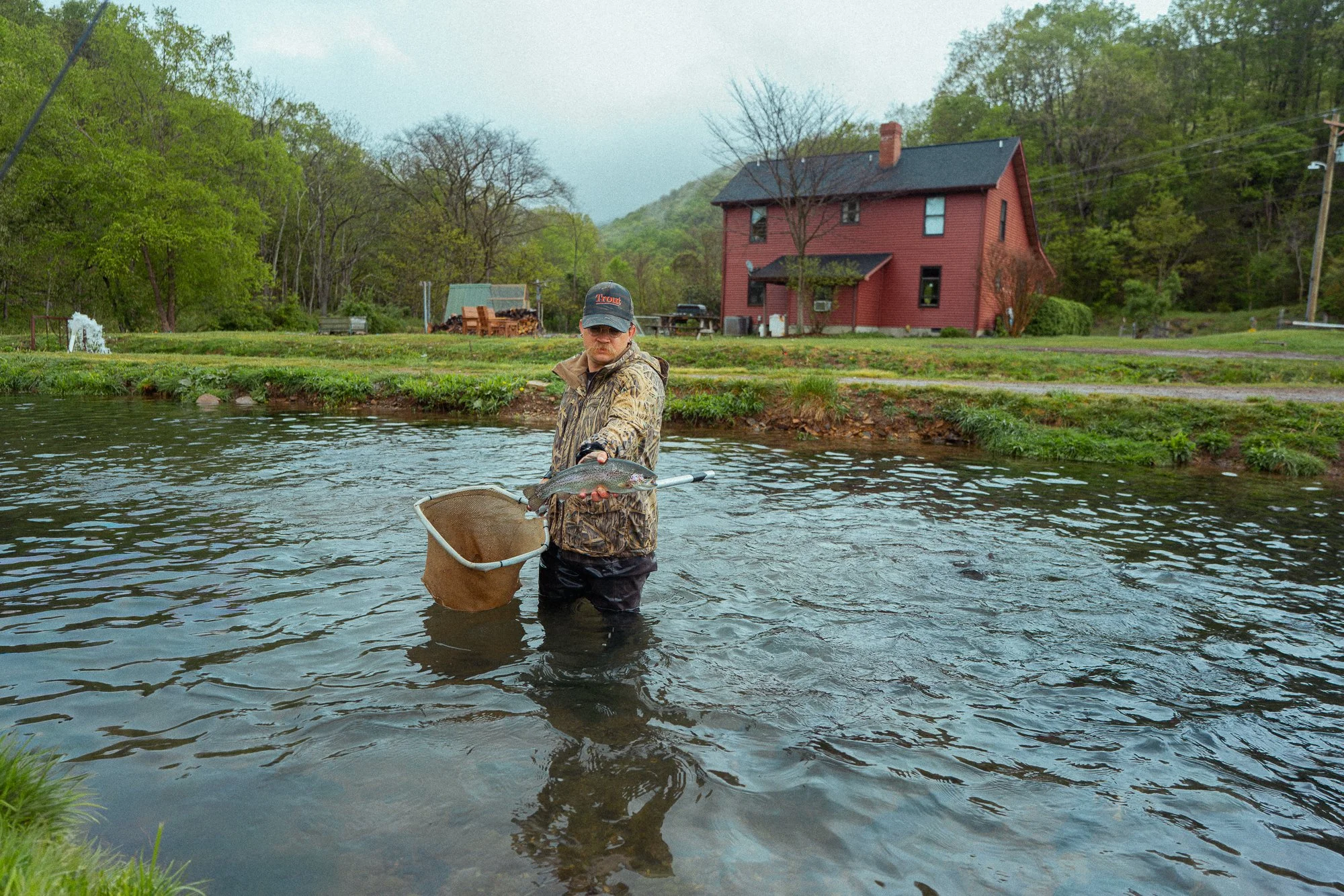
We Are Redefining Farm-Raised Trout
Fish farms have a bad reputation
In a lot of cases, it is deserved, but like all agriculture, there are systems that harm the land and the animals within the system, then there are structures that produce net positive outcomes. Part of our mission at Smoke In Chimneys is working to redefine what a farm-raised trout can be and should be.
The simple fact is that not all farms are equal and not all farms have the same practices. This is the same with fish farms.

About Our Hatchery

Fed with the clear, cool waters of the Virginia mountains
All of our trout are grown and raised in the fresh mountain spring mineral water that comes out of the rocks only meters away from the hatchery building. The water that comes from this limestone aquifer has a natural pH of 8 and flows at about 3,000 gallons/minute.
-
Up in the hills of Appalachia, our hatchery sits on untold reserves of some of the freshest, cleanest water on the planet - because of this, we often get comments that our trout “tastes like clean water.”
The cold mountain spring water that comes straight out of the rock feeds into one of the healthiest and nutrient dense streams in the state, according to one of the wildlife biology professors at Hollins College. The density of life in the stream indicates cleanliness and health of the water and ecosystem.
They say there are around 7 miles of caverns underneath the ground here where the mountain drops down. We exist right in the middle of the drop, and the hatchery was built here because of this never ceasing water source.
It is humbling to be so reliant on the nature and consistency of this gushing spring. Everything we do is because of and subject to the quality and amount of water we have. Working with this beautiful piece of nature allows our product to bloom into an exceptional and unique product.
The water itself is full of life, perfectly structured and mineralized, oxygenated naturally, and teaming with an ecosystem that not only gives the trout beautiful flavor, but contributes to the wildlife around us.
We also get to drink from this spring, participating in an intimate way with the land and our livelihood. It’s an honor! Want to try it for yourself?
Raised Outdoors in Earthen Ponds
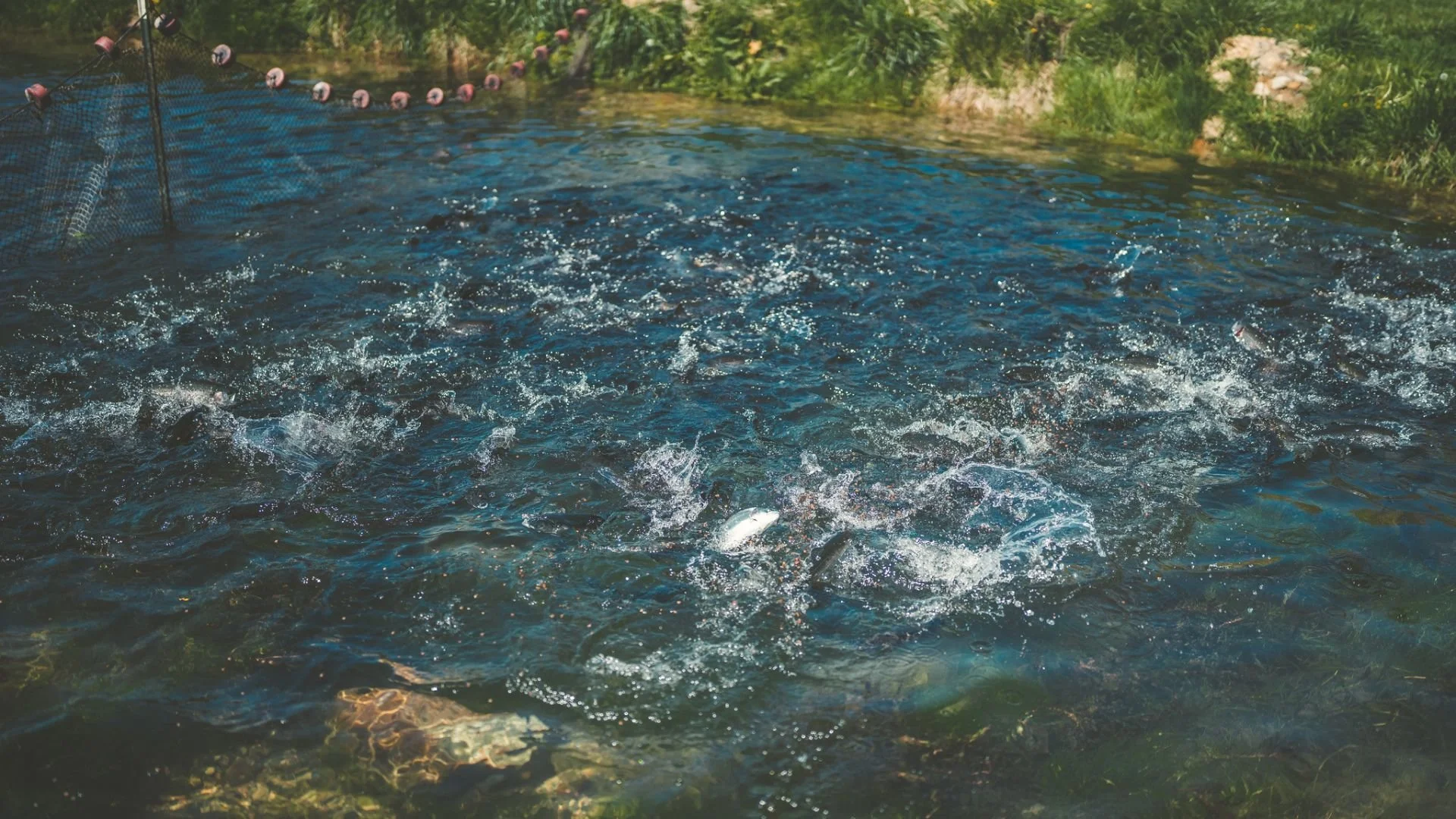
At most hatcheries, fish are raised entirely in raceways or tanks made of concrete or plastic. At our facility, the fish spend the majority of their lives in earthen ponds. These ponds provide access to a complete, living ecosystem filled with aquatic plants, insects, and microorganisms.
This setup closely mimics conditions in the wild, resulting in healthier, more robust, and happier fish.
-
An earthen pond is a man-made body of water dug directly into the ground, with soil and rock forming the walls and base. In our system, we construct a gentle tilt using shale, allowing water to flow entirely by gravity from one end of the pond to the other.
We do use raceways on our property, but only for sorting and temporarily holding fish. We’re committed to earthen ponds as a cornerstone of sustainable aquaculture and responsible animal welfare.
Of course, this method comes with its challenges. Earthen ponds promote plant growth, which can quickly become excessive. Dense vegetation draws oxygen from the water, potentially threatening fish health. To maintain ideal oxygen levels, critical for the trout’s gill function and overall well-being, we regularly clear plant buildup.
The use of shale is essential to our system. A shale-lined bed provides a solid, compactable bottom that can support foot and vehicle traffic when dry. The rocky substrate also prevents debris from absorbing into the ground and helps create a habitat for aquatic invertebrates, another natural food source for our trout. This simulates the gravelly bottom of a wild trout stream and enriches the pond’s biodiversity.
This approach emphasizes working with nature rather than against it. By designing ponds that support a thriving ecosystem, we raise fish that are not only cleaner and healthier, but more naturally adapted and resilient.
A healthy trout pond should have:
💦 Clean water flowing through it constantly
🦟 Habitat for bug and invertebrate life
🔎 Water that is clear enough to see the bottom
🪨 An evenly graded packed bottom that encourages water to flow downstream
🐟 Room for fish to swim without bumping into each other or becoming stressed
What the Trout Eat
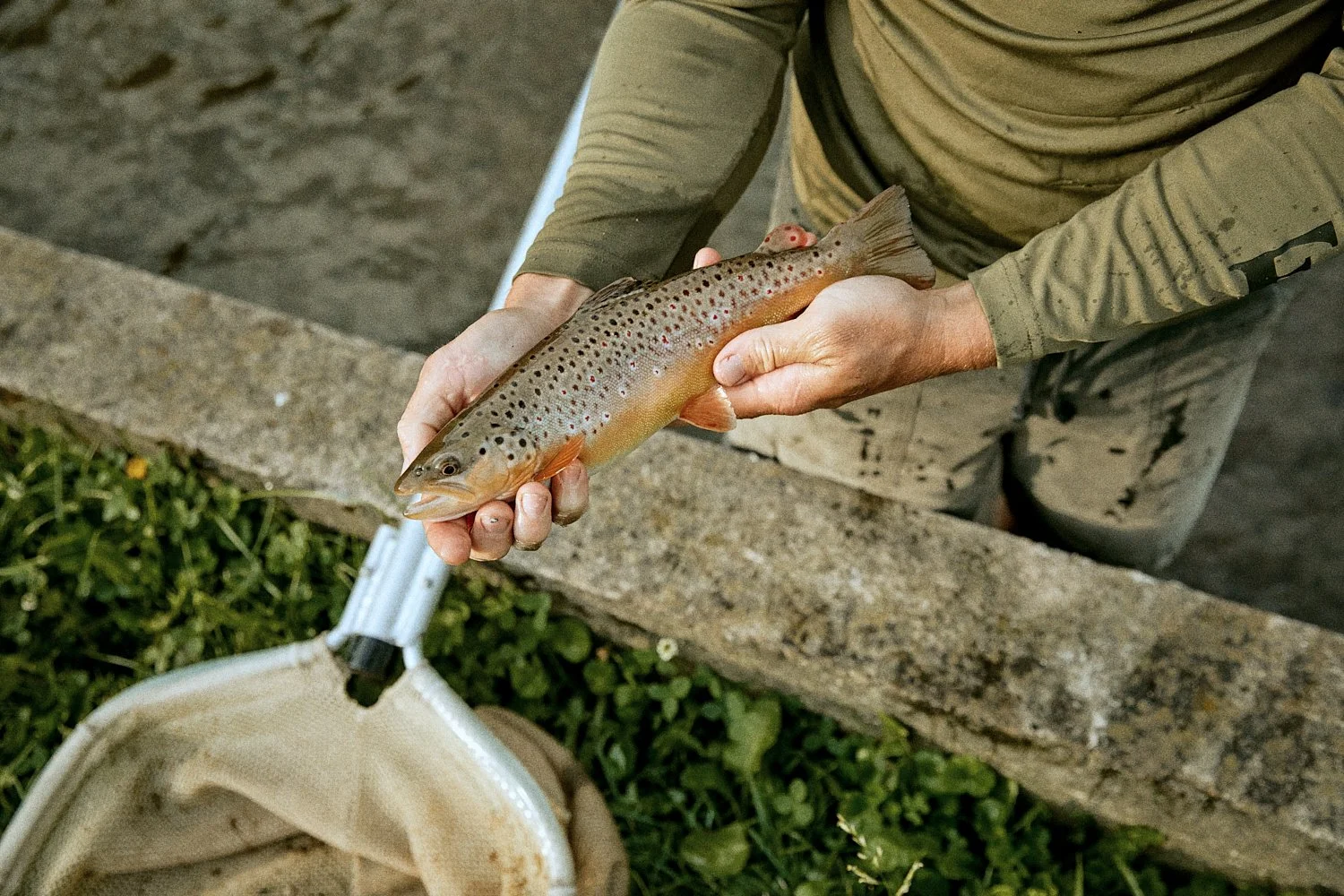
Because the ecosystem of the stream and ponds is extremely healthy, there are a lot of naturally occurring bugs, nymphs, and vertebrates that grow in the water or land on the surface during the morning and evening hatch that the fish feed on.
In addition to bug food that naturally occurs in the ponds and water, we feed our fish the best quality feed we have been able to find thus far.
-
The first thing we feed our trout after they hatch is dehydrated grass-fed beef liver. At this stage, their stomachs are very sensitive. Beef liver is a superfood and one of the easiest for them to digest. Regular trout feed would burn up their stomachs due to nitrogen content.
Grass-fed beef liver stands out as one of the most nutrient-dense foods available. A piece of beef liver the size of an acorn can sustain 1000 fry for weeks. The practice of feeding organ meats to fish dates back to 1300s, originating during the development of aquaculture. It has been fed far longer than the modern day commercial fish food.
After the trout have gotten big enough to be moved out of the hatchery building (around 1-2 inches) we are able to start feeding them. This feed is 65% protein and fat from ocean-based fish products. There is a 4% grain fiber included, which is the lowest grain fiber feed we have been able to source. The last 30% is plant products and trace minerals to ensure a balanced nutrient make-up.
Trout eat between 1 and 2% of their body weight per day. Because we are actively trying to get them to grow, we really push for a full 2%

How Our Hatchery Affects the Ecosystem
We drain our raceways everyday to ensure the water is kept free from extra food, fish poop, and other particle buildup.
The runoff from our raceways flows downstream and joins up with the creek on our property. We get a lot of questions and comments on the negative impacts of this, but in reality, the organic matter is just the right amount to supercharge the creek and create a positive impact.
-
The best tasting fish are raised with a constant supply of fresh, clean water. Our aquifer and gravity-fed system create enough flow for the water in our ponds to be fully changed 4 times an hour.
This is key for the health of the fish as it ensures much of the silt, sediment, fish poop is filtered out - just like it would be in a healthy trout stream.
On a typical farm, people don’t find fault with the animals defecating on the land. Why is the response so different when it comes to fish?
Broiler chickens that are given access to fresh grass everyday, spread their impact via nitrogen deposits which results in the grass becoming greener and healthier. We have seen similar results with the impact of our hatchery.
There is a thriving ecosystem directly downstream and a growing wild trout population.
The reality is that animal impact, when managed responsibly, is beneficial to the ecosystem. It’s the way nature was meant to operate and it is through it that the ecosystem thrives.
The Future of Sustainable Aquaculture
As the oceans continue to degrade and wild populations decline due to increasing demand for wild caught seafood, I believe aquaculture will become more of a prominent topic in the food conversation.
I’m not anti-wild caught. I’m just anti mass extraction of the oceans.
Seafood is the last wild food that we enjoy on a large scale. Look what happened to the buffalo, in a little over a hundred years the population was decimated. Sustainable aquaculture takes pressure off wild fish stocks and also gives us the delicious seafood that we all love.
Do you support your local trout farm?